When I Was No Longer the Caregiver: Grieving the Role of Daughter


When my mother passed away, I expected the grief.
I expected the tears.
I expected the ache of missing her.
I expected the waves of sadness that come when someone who shaped your life is no longer physically here.
What I didn’t expect was the grief of losing my role.
For nearly thirty years, I wasn’t just her daughter.
I was holding space.
For decades, my mother struggled deeply with depression and anxiety.
Long before there were medical diagnoses that required appointments and medications, there were emotional storms.
Fear.
Withdrawal.
Overwhelm.
I learned, slowly and quietly, how to steady myself while also steadying her.
I learned how to hold space for her mental health while trying to navigate my own.

Then, in the last ten years, that emotional caregiving expanded into physical caregiving. Her medical illness gradually worsened.
There were appointments.
Decisions.
Crises.
Worry.
And often, the added layer of watching her resist the very guidance that might have supported her healing. There is a particular exhaustion that comes from loving someone who is suffering — and who also struggles to care for themselves.
For decades, my nervous system was attuned to hers.
Watching.
Monitoring.
Anticipating.
Holding.
Even when I wasn’t physically with her, some part of me was braced.

And then one day… it stopped.
The responsibility ended.
The vigilance quieted.
The phone stopped ringing.
The calendar cleared.
And in that silence, I felt something I didn’t know how to name at first.
Spaciousness.
It was peaceful.
It was disorienting.
It was heavy.
It was light.
Sometimes all in the same hour.
I realized I wasn’t just grieving my mother.
I was grieving who I had been in relation to her.
For three decades, caregiving had shaped my identity.
It had shaped my nervous system.
It had shaped the choices I made and the risks I didn’t take.
Who was I if I wasn’t the caregiver?
Who was I if I wasn’t the responsible one holding everything together?
What do I do with the energy that once flowed toward her care?
These questions felt vulnerable. Almost disloyal.
But they were honest.
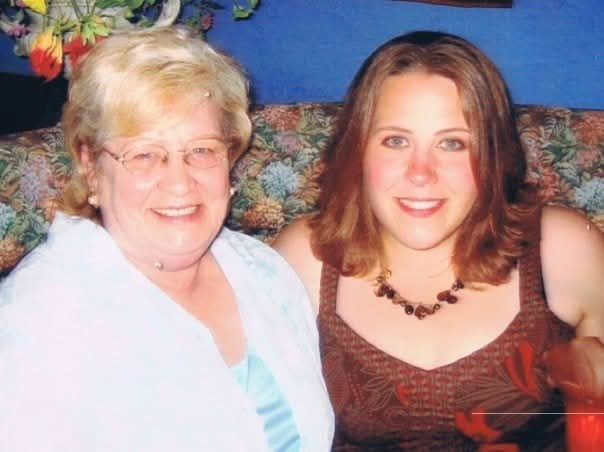
There was also something else that felt almost forbidden to admit.
Relief.
Relief that she was no longer suffering in her mind or body.
Relief that I was no longer bracing for the next call.
Relief that the long, long season of caregiving had come to completion.
And then, almost immediately, guilt for feeling that relief.
What I have come to understand is this: relief does not cancel love.
Grief and relief can coexist in the same heart.
And then something unexpected happened.

I came to Bali.
Being here — far from home, far from routine, far from the version of myself that existed in constant responsibility — created space I have never experienced before.
In the quiet mornings.
In the warmth.
In the stillness without obligations.
I began to feel something unfamiliar.
Myself.
Not as someone’s caretaker.
Not as the hyper-responsible daughter.
Not as the one absorbing another person’s fear.
Just me.
And as confronting as that has been, it has also been freeing.
For the first time in my life, I can feel what it is like to move through the world without being restricted by my mother’s fear of everyday life.
Without filtering my choices through her anxiety.
Without shrinking myself to keep her regulated.
Without carrying the frustration to her reluctance to care for her own health.
There is grief in that realization.
And there is also growth.
When I return home from Bali, I will not only be returning as a daughter who has lost her mother.
I will be returning as my own person.

In a strange and beautiful way, I feel like I am stepping fully into adulthood for the first time in my life — not defined by caregiving, not shaped by inherited fear, but grounded in my own autonomy.
That does not erase my love.
It does not erase my grief.
It does not erase the tenderness of years intertwined.
But it does mark a threshold.
When caregiving has lasted decades, the body does not simply “move on.”
It decompresses.
Fatigue.
Emotional waves.
Unexpected tears.
Moments of lightness.
Moments of heaviness.
This is not weakness.
It is unwinding.
It is a nervous system recalibrating after years of attunement.
It is love changing form.
I am still her daughter.
That will never change.
But I am no longer her caretaker.
And that version of me — the ever-attuned, always-holding daughter — has gently laid down her role.
If you are a daughter walking this path too — especially if your caregiving has spanned years or decades — I want you to know:
It is okay if you feel empty and free at the same time.
It is okay if you feel relief and guilt in the same breath.
It is okay if you are unsure who you are without that role.
This is what identity transition feels like.
This is what nervous system unwinding feels like.
This is what stepping into your own adulthood can feel like — even later in life.
We are still daughters.
But we are also becoming something new.
And that becoming deserves compassion, space, and gentleness.
If this is your season too, you are not alone.
We are walking this threshold together.
This season has reminded me that healing is not something we teach from theory — it is something we live, breathe, and embody.
And I am still walking mine.


Comments